

HyProMag
In partnership with
- Home
- Case Studies
- HyProMag
How HyProMag is Transforming Rare Earth Recycling
Tyseley Energy Park brings together like-minded organisations that are driving the clean growth revolution, using emerging technologies to innovate green tech solutions.
We are delighted to showcase the work of HyProMag, an organisation which is revolutionising rare earth magnet recycling.
Lets discuss how HyProMag is bringing magnet manufacturing back to the UK for the first time in 25 years, using pioneering technology and a newly opened rare earth magnet recycling facility onsite at Tyseley Energy Park.
Meet HyProMag
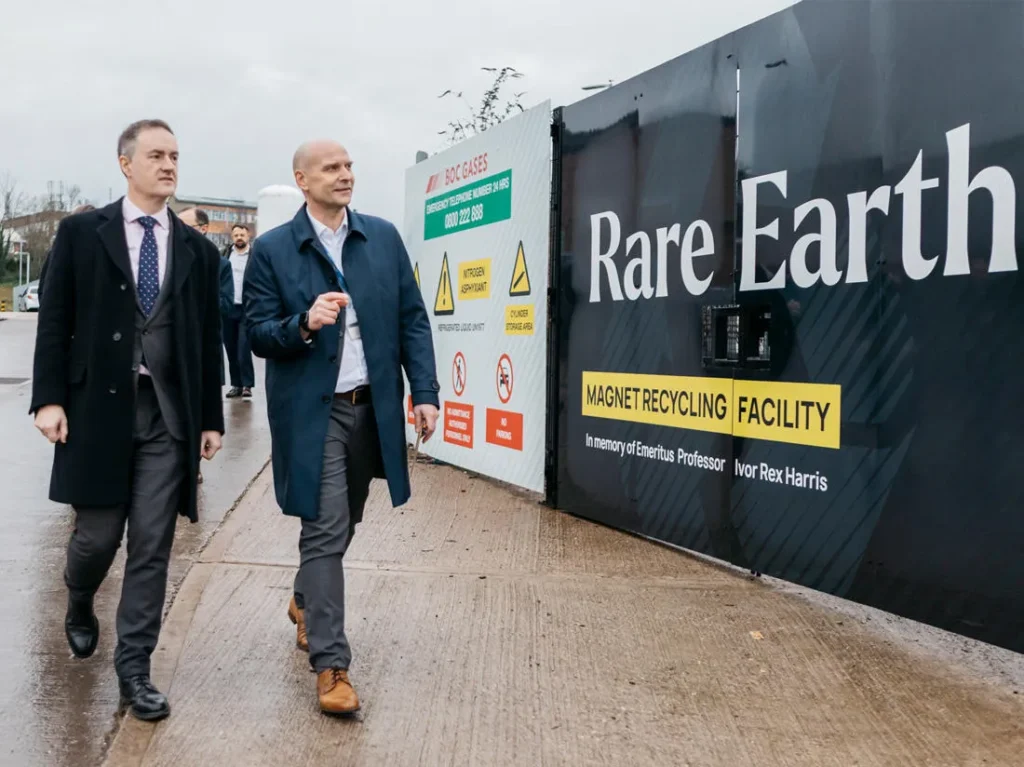
HyProMag was founded in 2018 by the late Professor Emeritus Rex Harris, former head of The Magnetic Materials Group, at The University of Birmingham, alongside Professor Allan Walton, Dr John Speight and Mr David Kennedy.
This group of leading world experts in the field of rare earth magnetic materials, alloys, and hydrogen technology, brought significant industry experience to the business.
HyProMag’s mission is clear: to develop a full recycled supply chain for rare earth magnets based upon neodymium iron boron (NdFeB).
Industry Collaboration
Innovation Ecosystem
Sustainable Impact
Rare earth magnet recycling and the HPMS Process
HyProMag uses ground-breaking Hydrogen Processing of Magnet Scrap (HPMS) technology to recover and recycle rare earth magnets from waste streams, it’s an extremely efficient method with a low environmental footprint.
The rare earth group consists of 17 elements, of which a handful are used to make magnets, found across various applications, including: electric vehicles, wind turbines, and computer hard drives to name a few.
The process employs hydrogen to break apart NdFeB magnets to powder, this process also causes demagnetisation, making it easier to extract. It is then purified so that it can be re-processed into new magnetic materials or rare earth alloys.

Why Tyseley Energy Park
As a member of Tyseley Energy Park, HyProMag benefits from an ecosystem of leaders in hydrogen innovation, allowing the business to collaborate with its peers that are also pioneering the green technology industry.
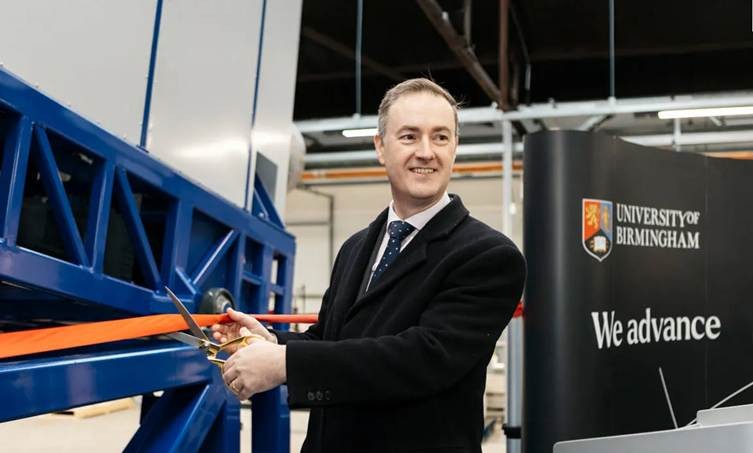
Using the University’s innovative Hydrogen Processing of Magnet Scrap (also known as HPMS) technology, the new facility will efficiently extract magnets from a wide range of end‑of‑life products, transforming waste into high‑value materials essential to low‑carbon technologies including electric vehicles, wind turbines, robots, and medical devices. All the while contributing to the circular economy.
The move from a small proof‑of‑concept to a commercial‑scale operation at Tyseley Energy Park represents a major leap forward for HyProMag, not to mention both the West Midlands and the UK.
With the ability to recover more than 400kg of rare earth alloy per batch, processing up to 300 tonnes of sintered magnets annually, the facility brings magnet manufacturing back to Britain for the first time in 25 years.
Crucially, recycling these materials delivers up to a 90% reduction in CO₂ emissions compared to traditional mining and refining, aligning perfectly with our mission at Tyseley Energy Park to accelerate clean energy innovation and support the UK’s transition to a Net Zero economy.


- Hydrogen innovation
- Rare earth magnet recycling
- Green technology
- Reduction in CO₂ emissions